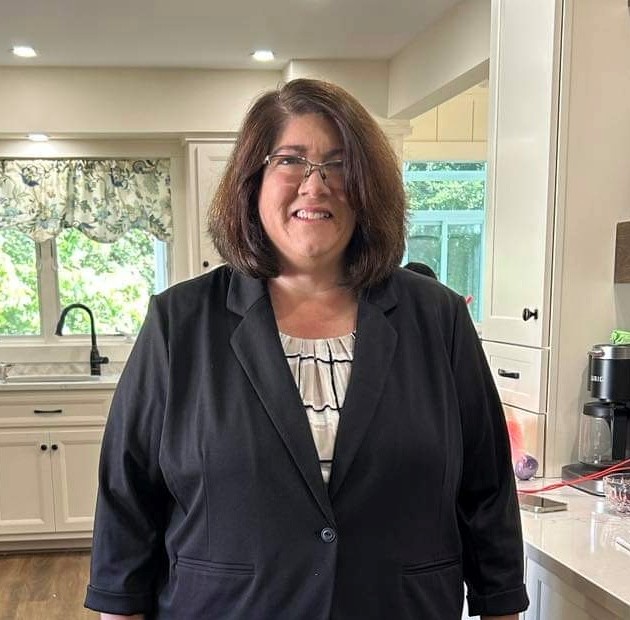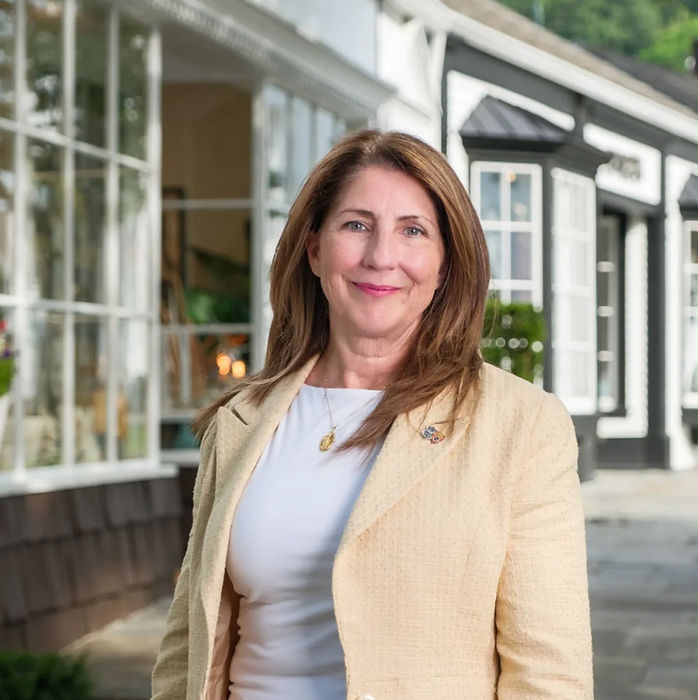


Kerri Golini has worked in Three Village Central School District since 2008, most recently as chairperson of the World Languages and English as a New Language Departments. She is running to succeed Vincent Vizzo for her first term on the Board of Education. Below is the full transcript of Kaleidoscope‘s interview with Golini, lightly edited for clarity.
Why are you running for the board? It’s an unopposed election, so you’re going to be on the board, but what do you hope to accomplish?
I chose to run for the Board of Education because I have dedicated nearly 30 years to this district, and I have truly valued that experience. While I was ready to retire, I wasn’t ready to fully step away. I believe that this district is made up of exceptional people, and I would like to continue to work alongside them to ensure we provide a high quality of education that defines Three Village.
Do you have any specific goals, or are you just looking to go in with that broad mindset?
A broad mindset. I don’t have an agenda, and I truly just want to help in some of the decision-making. I believe that, with my work experience of being an educator specifically in Three Village, I could be a valuable member. I have experience in the classroom and as an administrator, and I can share about that experience with my fellow board members. For example, there’s recently been the question about the Intellectually Gifted program. I’ve had conversations with students about IG. So I feel like that experience could be useful when making some of these decisions. I have also been part of building certain programs that exist, and I can share the road that we took to get to those decisions or whether something was mandated. So I think I have things to offer to the district.
The population growth in this county has tapered in recent years, and enrollment has been declining significantly. 20 years ago the district had more than 8,000 kids, and now there’s barely more than 5,000. How important is this issue to you, and what are your ideas to best address it and the resulting financial difficulties?
I don’t have a solution for the financial difficulties. Without being on the board already, I think I would have to have access to the information that the other board members have to really come up with ideas of how we could approach it.
I know there were conversations about closing buildings. I would like to give a thoughtful response to that, but I just don’t think I have enough information yet. Yes, closing the building would save money, and with the declining enrollment, it seems to make sense that we don’t need the space. But there are other factors that can play into that decision. For example, there are conversations about pre-K being mandated for all four-year-olds in two years. So if we close the building, because it does seem to make sense at this time, then where are we putting these four-year-olds two years from now? I think that it has to be very well thought-out. It’s a big decision to make and I don’t have the solution, but I would like to be part of the conversation.
One of the effects of these budgetary difficulties have been the cuts to various extracurricular activities. What is your feeling about these cuts? Would you seek to reverse them?
I support clubs and activities. I think they’re extremely important to students. I think we need to offer experiences to our students outside the classroom. Obviously, we go to school to learn and that is the priority, but there is so much more, and there’s so much that can be learned outside the classroom. I fully support clubs, sports, and any additional experiences that students can have outside the classroom.
This year the funding for clubs has been reduced by 20%. Do you want to reverse those cuts?
Eventually, if the money’s there, I would, of course, like to reverse it. Again, not being on the board, I don’t have this information, but just from being in the district, I think the cuts are for clubs that have very low enrollment. Unfortunately, I think we do have to service as many students as possible while being fiscally responsible. I would love for, if someone has an idea for a club, and it’s you and your four friends, to have that opportunity. But now we have to pay an advisor, and that’s hard. I would love for that to happen for all students, but I think we have to be fiscally responsible. We may not be able to offer it to all the clubs.
One of the most controversial board decisions of the last several years was the refusal to move start times later last year. Do you support a start time change, and would you push for one when you get on the board?
No, I would not push for it. In an ideal world, students would be able to start later, but I’m not confident that the change in start time would result in more rest for students. I think students can be overscheduled. If your day includes all these activities and a part-time job and some socialization with your friends, and your day is 18 hours, you’re only getting six hours of sleep either way. I think that’s part of it.
Students are also up late on their devices. If they started an hour later, I don’t know that they would necessarily get the rest that they need. Also, it’s a lot of money for that change in start time. Personally, I have two children who went through Ward Melville that started early, and they’re healthy and thriving post-college.
This year, New York State enacted a statewide bell-to-bell cell phone ban for all students. Do you think this policy was helpful to our students, both in and outside of an academic context?
Absolutely. I was thrilled when that happened. I’m from a different generation, so my perspective is a little different. I know there’s a lot of positives with the devices, but I’ve seen a lot of negatives. So I’m absolutely in support of the ban. I think it’s great for students to not have their phones on them all day long while they’re in school.
I did a leave replacement this past year for a couple of weeks because I’ve been out of the classroom. Since I left, I’ve been out of the classroom for 12 years. There’s a big difference with how kids are and how they behave. Even with the ban, they automatically open their Chromebooks to play games if there’s two minutes of downtime. That’s instead of turning around to a friend and asking, “What did you do last night? What did you do last week?” So I think it is very helpful that they don’t have their devices.
As previously reported by Kaleidoscope, phones are still being used in classrooms on a regular basis. Are there any plans on the board to better monitor and implement the cell phone ban?
So I did the leave replacement at the middle school. Not one student had their phone out, both in the hallways and in the classrooms. I had one student ask permission to pull out his phone from his backpack and call his mother. Those students are abiding by the rules.
I think the high school is going to take a little time. At the middle school, you have sixth and seventh graders who were not allowed to have phones in elementary school. They are not accustomed to having it, so that was an easier rule to enforce. As those students who haven’t had a cell phone get older and move up to the high school, I don’t think it will be as much of a problem. Also, keep in mind that the first year doing anything is usually the hardest.
As a board member, I would ask for the administration to have more conversations with their staff members and make sure that the message is received: that this is a rule. It’s not an option; it’s banned. I’ve heard what’s going on in high school. I heard that, for the most part, teachers enforce it in the classroom. But there’s five minutes left over and the bell hasn’t rung yet and they say, “OK, you can go on your phone.” I heard that they’re in the hallways.
I don’t know exactly how they’re enforcing it. I would have to get more information on what they’re doing. If there’s an infraction, what are they doing? Do you get detention? Do you get a warning?
We’ve recently had some issues with both students and teachers using AI. Do you believe there is anything the board can do to limit inappropriate AI usage?
I think we need clear, neutral guidelines that identify what is considered acceptable versus inappropriate. I think we need to provide guidance to students and staff on how AI works and about its limitations and its issues. There’s issues with AI. I think maybe we could incorporate AI literacy into the curriculum, maybe into English classes. Teachers, because they’re older, probably need professional development.
More broadly, do you support the widespread integration of technology into education?
As a tool and a resource, yes. But not as, “this is how we teach.” I think technology has its purpose, but it should not be the only way that we’re teaching students.
What is your position on a potential introduction for armed guards to the district security system?
I support it. I think it would be a huge deterrent, and I do believe that it’s the only way that a shooter is going to be stopped if, God forbid, that was to occur in our school. Obviously, a lot of thought has to go behind how we have armed guards. Is it just the security guards that are police officers that used firearms in their day-to-day career as a police officer? Are we going to continue with training for them? My brother-in-law happens to be a retired police officer: to hold his license, he has to go every year for training and a test. So to answer your question, yes.
One of the major questions here is whether they would be outside or inside the buildings. What is your position on that?
I would be fine with both. But I don’t think every security guard needs to have a gun on them.
We’ve seen a trend towards stricter control of students in the district. For example, Ward Melville had an open campus 20 years ago. In general, should we be dictating students’ lives more, or should we give them more freedom?
I personally think Ward Melville students have freedom. I mean, now with the ninth grade, there’s a lot of students in the high school. Those ninth graders are 15. Some are 14. They’re not adults. Even for an eighteen-year-old, I think there needs to be structure. There need to be rules. You’re not in middle school and you’re not in elementary school: you should be given privileges and some freedoms. But from what I observed, I thought the level of freedom students have was fair and appropriate.
You weren’t on the board when it happened, but what is your position on the district restructuring?
I think that the restructuring has provided our sixth graders and our ninth graders with more opportunities for electives. Personally, as a parent, I like the other configuration for social and developmental reasons.
Special education services are a major responsibility for any district. How well do you believe Three Village is currently addressing the needs of kids with individualized education programs?
I think they’re doing an excellent job. Just a personal experience: my nephew had special needs. My sister and her family moved here for the special education programs. I think we service the students very well. I think we’re very supportive of our special needs students, and I think we offer many different programs to meet their individual needs.
Mental health support for students has become an increasing concern. Do you believe the district has taken enough initiative to address mental health? What, if any, improvements would you support?
I would support any improvement because you’re talking about the safety of a child with their mental health. Obviously, I would also support being physically responsible because the money’s not growing on the trees in our courtyard. We’re going to have some limitations financially, but I fully support programs to address mental health issues for our students.
Do I think they’re doing a good job? I know that they have done programs, they’ve pushed into classrooms. I know that they have hired additional staff in the past. This is not my area of expertise, but I was also the ENL director, and we had a social worker for our ENL population because their needs were unique. So I know that there’s only certain types of counseling that they’re permitted to do. I would even ask the social worker that I worked with, “Why can’t we do this?” There’s some limitations to how they could service the students, but I think they’re doing a good job and doing the best that they can?
Recently, Three Village District was named one of the top 100 districts in the United States. What steps do you believe the board should take to ensure that the district remains competitive at this level?
I believe we should continue building on the approach that has brought us to our current standing. I think we have a large number of course offerings. We have our sports program, our extracurricular clubs, and our music program. I think we just have to continue supporting these programs and make sure that those opportunities are there for our students.
Recently, we’ve seen many trends, including in Three Village, of students chasing achievements instead of deeply engaging with interesting subjects. Is there anything you could do as a board member to push students towards genuine intellectual curiosity?
It’s not something I think I can answer at the moment, because I think it requires some research and conversations with certain personnel. But this is a problem, and I don’t know how we would do that. I would love to be a part of that conversation, because I do think it’s important. As a mom who had two children go through the district, I do appreciate the strong academic environment Three Village has: it served my two children very well. I think recently it may have gone a little too far. For example, kids are cheating for a grade because they just want the grade instead of the actual learning.
I know sometimes students are not interested in all of the content that is required by New York State, but I just think you learn and grow more when you are generally interested in something. That’s why students who may not have been that A student in high school will get an A in their college classes, because now they’re in a course that they’re genuinely interested in. I wish it was different. I would love to be a part of that conversation, but I don’t have an answer. I think smaller class sizes could be helpful, especially for the students who may be struggling more.
In the last several years, there has been some discontent within the voting population. The bond failed in January, and the budget votes have been getting closer. What do you say to voters who are upset with the district and what they say is the status quo, whether that is because of high taxes, cuts to certain areas, or other reasons?
I do believe taxpayers deserve transparency about where all the money is going. I would like the community to have confidence that we’re prioritizing what matters most: strong classrooms, essential programs, and long-term student success. I think maybe we need to, as a district, make it easier to understand the budget, because it is complicated. There are so many regulations that go into this. I think we need to eliminate the inefficiencies that might exist. We need smarter planning, so we can reduce unnecessary cuts while being responsible with taxpayer money.
Any particular inefficiencies you had in mind?
Not really. Again, not being on the board already, it’s hard to know that.
Communication is key in shaping school policy. What do you think the board can do to better communicate with people and involve parents, students, teachers, and other stakeholders in decision-making?
Well, for the budget, the superintendent and assistant superintendent do presentations. They will answer questions, and they will explain. I don’t know if everyone’s showing up to listen. That might be part of the problem.
I do think that sometimes, if you just read the board presentation, things might not seem clear, and they just have to be explained further. The in-person dialogue is helpful. Maybe we do something different besides a presentation, where it is more of a dialogue and people feel more comfortable asking questions.
As far as communication, the district hired someone to do a lot of the public relations in the district. I think she’s great because the emails that I’ve received make it very easy for the family. They get a direct email which contains links and videos to explain everything. So I think they’re moving in the right direction for that. It’s new, so not everyone is aware of it. Maybe we can make phone calls (like Dr. Scanlon does with the holidays) to communicate that this is out there and available to community members. But I just started going on recently, and I found it to be helpful and better than what we’ve had in the past.
Many constituents have also voiced concerns about the uniformity of opinion and lack of debate on the board. Do you believe that the board has an obligation to make its debates more public and be more transparent about how it considers issues?
I think we can. I don’t know how we do that, because I know that they have their executive session prior to the public board meeting. I think that is still necessary, and I don’t know if the whole community should be invited into those conversations, because there’s a lot that goes on that probably people don’t need to hear. People get off topic. But maybe we can have something in between the public and executive sessions.
Is it a concern for you that you are running unopposed? Do you want to see more people running for the board?
I’m very happy that I’m running unopposed because I would imagine it would be more stressful otherwise. I’m also happy because I think the focus now will be the budget as opposed to the candidates, which I think is important. I think the budget needs to be the highlight.
However, it is a little concerning that no one else ran. People are too busy — I mean, I couldn’t do this if I was still working — so I understand. But I would hope that more people would be more interested. I’m happy for myself, but disappointed in another way.