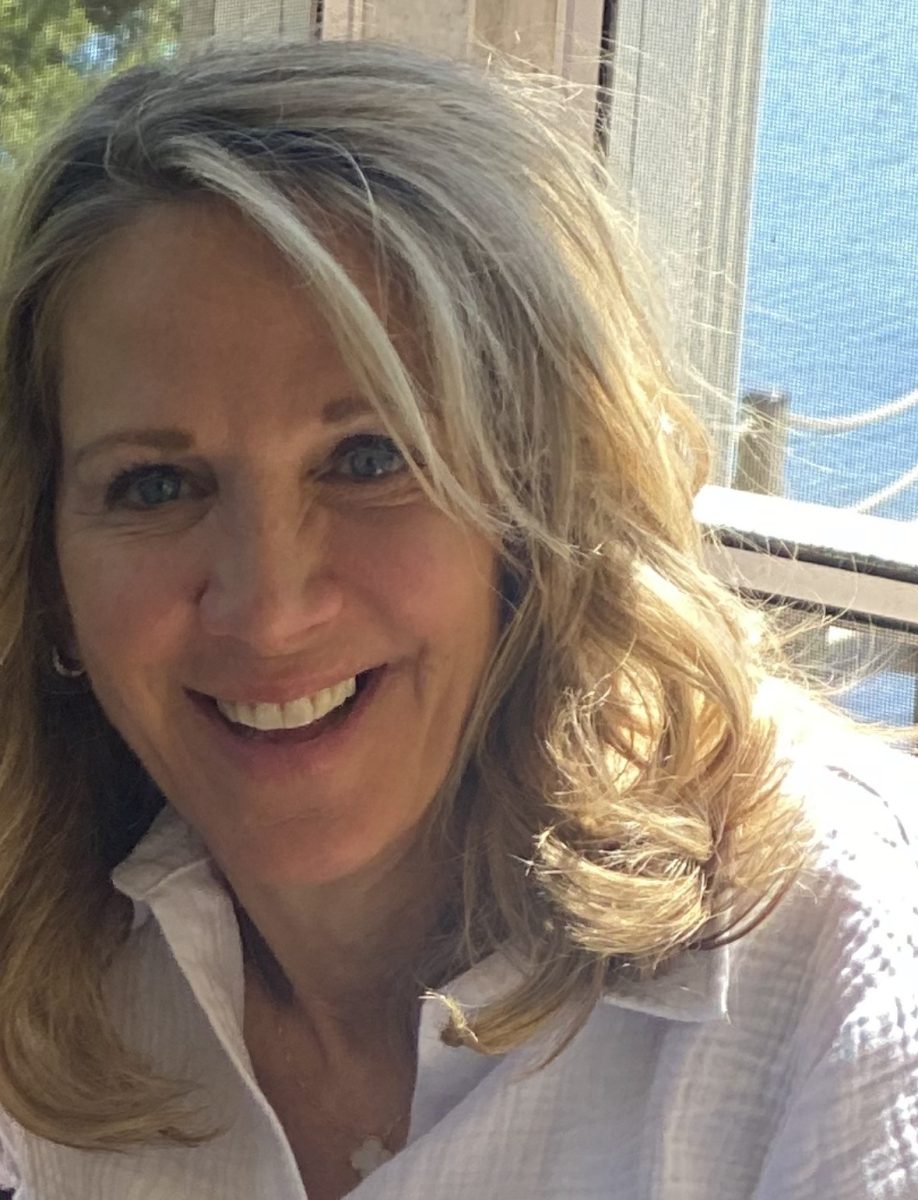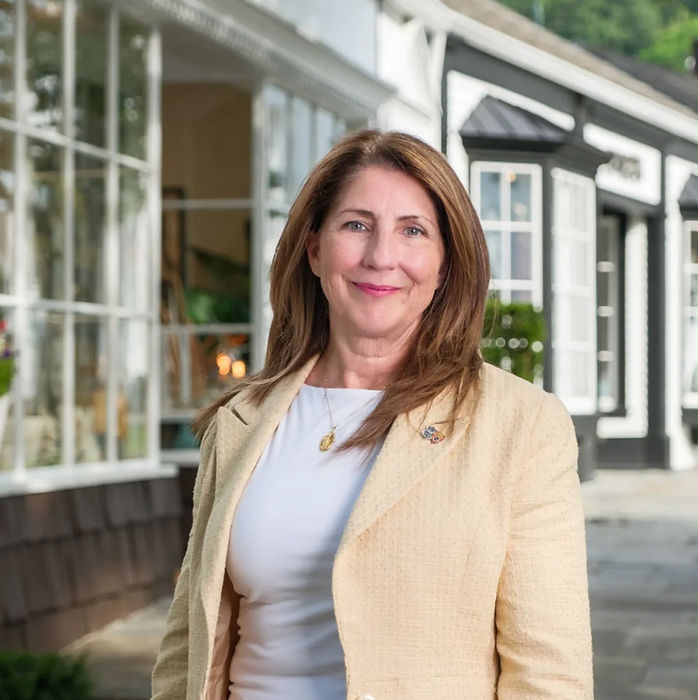


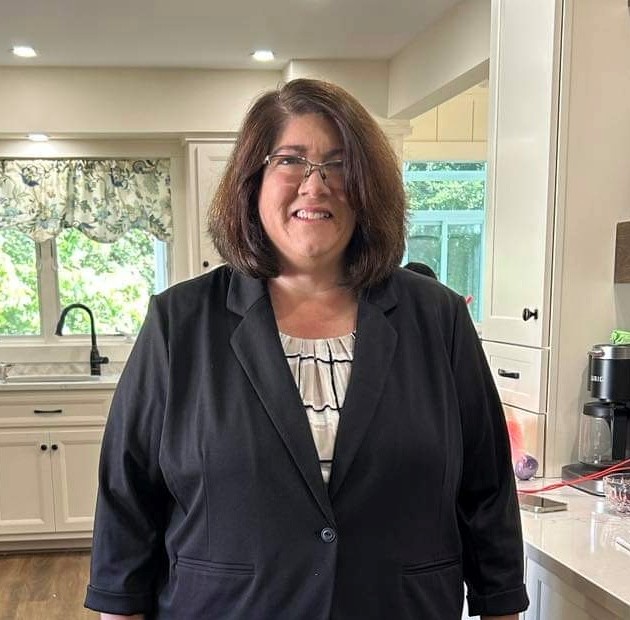
Karen Roughley has served on the Board of Education since 2023, including as its vice-president since 2024. Before becoming a trustee, she volunteered for many organizations within Three Village and worked in investment banking on communications, continuity, and crisis management. She is seeking a second term of three years.
Below is the full transcript of Kaleidoscope‘s interview with Roughley, lightly edited for clarity.
You’re running for reelection for the Board of Education. Why do you want to continue to be on the board, and what do you hope to accomplish if you’re elected to another term?
First off, we’re all running uncontested this year, so there’s no election. It’s three people up for three seats. Everybody that is running, which is two people that are currently on the board now and one new person, will have seats after the board vote.
I wanted to run for the board because I’ve been very involved with school since my oldest was in kindergarten, and I just want to give back to what the school gave me. That’s my most important thing: to make sure that everybody’s able to get everything that they ever wanted out of school and that we try to do the best that we can within our budget constraints.
Given your experience on the board, how have your priorities for the district changed since you first began serving? What issues do you think have become more urgent since then?
I don’t think much has changed. I’m always student-first, so I want to make sure inclusivity is there, the programs for the kids are there. I think increasing our career and technical programs is very important, but that’s been a goal since even before I was on the board — that really hasn’t changed. Those are my main things. And as always, the most difficult things, and what we’re going to be looking at in the future, are the budgets. We need to make sure we’re able to add these programs in while being fiscally sustainable.
What do you believe has been your greatest success so far on being on the board? And what’s been your greatest obstacle?
The greatest success has to be the school restructuring. That went exceedingly well, and it’s been worked on for years. On a probably less exciting note, we started a policy committee for the board, because one of the board’s main objectives is budget policy. We have hundreds of policies, and they need to be updated and maintained to follow all the new laws in New York State. Some of them haven’t been changed since 2009, which is not a good thing. So we created our policy committee, and we have been trying to go through all of the policies. We’ve now put them on a three-year rotation [for review]. From a housekeeping point, I’m very proud that we started that, and we are being pretty successful in that.
Again, our biggest obstacle is always the budget. We always want to try to make sure we are increasing our programs while keeping everything affordable. The biggest issue in our community now is that our taxes are high. They’re high for me, too. But we need to educate our children the best that we can.
Are there any plans to address the issues with regards to the budget?
They have been addressing them for years. Ever since the new superintendent came, which has been about four years now, we’ve been reducing staff. With our declining enrollment, we’ve been looking at classes that had less than 15 kids to see if we can combine them or move them into some other class, just so we have more staff available for the larger classes. So every single year, we’ve been reducing due to decreased enrollment.
We’ve also been looking at cost-neutral ways to improve the program, such as the Bloomberg lab. That’s not really costing the district anything next year, so we were able to cut out some things in the technology department to add in the Bloomberg lab.
The population growth in the county has been tapering in recent years, and we’re down significantly from the peak and population from 20 years ago. How important is this issue to you, and what ideas do you have to best address and combat this issue and the resulting financial difficulties?
It is an extreme issue, and they’ve been monitoring it for years. I will say that over the last four or five years, our enrollment in this district has stayed pretty status quo. As the grades get higher, we’re going to be losing people since our 12th grade has more kids than kindergarten, which I’m going to say has around 330. Nevertheless, going forward, most of our classes coming in have around the same amount of children, so we’re not seeing the decrease that we did see 10 or 15 years ago. We are getting pretty stagnant, which is great because that helps a lot with budgeting and staffing. But until that happens across all grades, they’re constantly looking at staffing implications and the classes that are being held.
We did look at repurposing a school, because our numbers are down in the elementary schools. We’re looking at maybe selling off some properties or some lands. So we’re always looking at different ways to help offset costs.
However, even though our enrollment is decreasing, a lot of the district’s needs have been increasing. We’ve added multiple extra counselors, guidance counselors, and psychologists. Our ENL program has increased. So there’s a huge amount of increases that went along with the enrollment decreases. A lot of people don’t understand or notice that, but we have added a lot of staff while also reducing a lot of staff because of the enrollment changes.
You mentioned repurposing the elementary schools. You were the sole member of the board to have voted against accepting the School Closing or Repurposing Committee’s recommendation to not take any major action at that time. Can you please explain your decision?
Even prior to being on the board, I supported repurposing a school because the numbers are low enough that we could combine at least two of the elementary schools together. That being said, that’s my opinion. I’m one of a board of seven, and we have to go with majority rules. We created a committee that had representatives from each of the elementary schools and community members. They unanimously decided that they wanted to keep the school open. That’s fine, but as a board member, I’m supposed to vote on how I think, and I think a school should have been repurposed. However, the majority disagreed with that. As a board member, you need to stand behind what the initial vote is, so whatever goes forward, I’ll be 100% in sync with my other board members.
In recent years, extracurricular activities, athletics, and clubs have faced significant funding cuts. Would you seek to reverse these cuts in another term or are you willing to continue them?
I’m not aware of any significant cuts to our clubs. (Editor’s note: In the current budget proposal, the board recommended decreasing co-curricular funding from $1 million to $800,000.) We have been looking at our clubs that have less than 10 or 15 attendees, and seeing if we can combine some of those clubs together for budget purposes. After all, we are paying for an advisor for each of those clubs. But I don’t know of any cuts to their actual individual budgets.
New York State has recently enacted a statewide cell phone ban for students this year. Do you think that the implementation of this policy was helpful towards students, both in and out of an academic context, or has it been ineffective in some ways?
It was well overdue to have some sort of ban for cell phones during class time. It’s important for the kids nowadays to learn how to interact and socialize face-to-face, rather than texting each other or looking at their phones while sitting at the lunch tables. I think from a mental health standpoint and an academic standpoint, it’s a great step forward.
It’s going to get easier as time goes by. Right now, you have your 10th and 11th graders that always have their phones in school so it’s a little difficult to break that habit. But then you have the sixth, seventh, and eighth graders that never had their phones in school. So it’s going to be easier as the grades go on, because they’re not even used to having that.
As previously reported by Kaleidoscope, phones are still being used in classrooms on a regular basis. Are there any plans on the board to better monitor and implement the cell phone ban?
We do monitor them. At the end of the year, we’ll be getting a report on exactly how many incidents happened. It’s a habit, so people are addicted to the telephones, including adults and kids. Cutting it off immediately takes work. Kids are used to having their phones in the lunchroom or study hall, or using them during class when it ends five or 10 minutes early, so it’s difficult. I think there’s been good progress. As I said, as the younger kids come up, they won’t be used to having their phones. So as the years go on, it’s going to be much easier. But yes, there have been a lot of telephone incidents for the upperclassmen.
Last year, you voted to remove the start time change from the 2025-2026 budget. Can you please explain your decision and whether you would be open to reconsidering it in the future?
I’m very supportive of start times, but the issue we came across last year was the budget. Our budget cycle last year was very difficult, and it would have cost about $1 million to implement start times. We would have needed to take that $1 million from someplace else, and the only way that we could do that was by letting go of staff and increasing the elementary class sizes. To me, what’s more important is keeping the elementary class sizes smaller. Of course, every single year, a start time change is talked about and considered, but it’s all about finances. If we could afford it and keep it fiscally sustainable for years to come, then I would absolutely support putting that into the budget.
Many Three Village graduates and students believe they’ve significantly benefited from the Intellectually Gifted program, which was also eliminated within the same budget process. Some parents have been attracted to the school district specifically because of the IG program. Would you support reinstating it?
We take a lot of lead from our administration. We’ve seen overwhelmingly positive messages with regards to eliminating fourth grade IG and creating the STEAM program. Now, it reaches all of the fourth graders throughout the school, not just 20 or 25 kids, and everybody’s benefiting from it. In the beginning, yes, it was very difficult. We received a lot of telephone calls and emails from people that wanted to keep IG in.
However, as the year progressed, we’ve only been getting praise. They added the research project, which was one of the features of IG, back into the STEAM program for the fourth graders. People were very happy about that, since the kids could take it any way that they want, and our STEAM teacher worked one-on-one with all of those kids on their projects. Looking at the education of all of our students, adding the STEAM program back was very beneficial for the overall district.
For those who may be unfamiliar, what exactly is the STEAM program? It stands for Science, Technology, Engineering, Arts, and Mathematics, but what does that entail?
It’s an enrichment program for all of the students. I don’t know all the exact details, but it’s a whole bunch of different programs in the STEAM realm. We used to have that years ago: we had it right before the pandemic, and then we had to get rid of it. Prior to that, they had the PIE program. So there were programs like that around years ago, and it was always very well received.
There have recently been issues with students inappropriately using AI in classes. What do you believe should be done to combat this? Should the district be monitoring students’ AI usage more closely?
Our technology department recently gave a fantastic presentation on our goals going forward for AI. I’m not aware of any issues going on with AI in the high school or middle schools. I talked to some people, and we weren’t aware of anything major. Of course, there’s always something going on, but nothing widespread.
I do know that the administration has a plan on what we’re supposed to be teaching about AI: the whole point is that for anything new that comes out, we need to teach the kids correctly how to use it. That’s what our technology department is planning on. So once we teach them how to use it correctly, we’ll hopefully be combating any of these other issues. After all, they’re going to get caught eventually — we hope. And if it’s being used, send it to your administration, because they should know about it and deal with it.
What’s your position on the potential introduction of armed guards into the district’s security system?
This is a very passionate subject for many people in the community. We talked about it for quite a while, but there was an issue with our civil service test: we couldn’t hire our own guards because they did not take the civil service test, and we didn’t know about that. One of the main reasons why we were considering armed guards was because we could use our own security for that. We could vet them because they would go through our own background checks, but we can’t do that right now. So we had to put everything on pause to see what is going to happen with that. Once the civil service piece is ironed out, the conversation will come up again to see if we’re willing to have them inside the building or not.
What are the arguments regarding armed guards that have been discussed on the board?
Safety for the students; there’s always accidents that happen. Some people don’t want guns in the building but some people do. It’s fairly evenly split in the community, and it’s a hard thing. The board’s pretty split on which way we want to go. But right now, we can’t even discuss it until we figure out the civil service piece. Then there’s the idea where we don’t have the guards inside and they stay outside. For example, we could have people only in patrol cars. In short, there’s a whole bunch of different options, but we need to iron out the civil service piece first.
You mentioned the restructuring earlier. As the school year is coming to an end, can you please comment on the successes and maybe the possible problems that have been caused by the restructuring?
At the end of the year, the administration is going to do a recap of how the year went, and they’ll talk to all the teachers as well as some students and parents. There will always be tweaks to any program that is implemented. From a board perspective, we haven’t heard a single negative thing about the restructuring at all. We had a lot of people very nervous at the beginning of the year, but as it progressed, staff and parents alike have been very happy. We’ve heard good things from the students as well. But I’m sure if they find anything at the end of the year that needs to be tweaked, they’ll be doing that for next year.
Special education services are a major responsibility for this district. How do you believe the district is currently addressing the needs of children with individualized education programs?
Three Village is one of the top special education schools on Long Island — we have a very good program. People move here to the district for this reason. Now there’s always going to be kids that fall outside what a program does, but Three Village is very good about modifying it for those children. We’re very flexible here on what we can and cannot do.
Both of my kids went through the special education program, and I’ve had tremendous success. My older daughter’s in college now, and my younger one is graduating this year. So I have complete faith in them going forward and doing what’s best for the kids. They’ve started implementing more inclusion activities. For example, we had the Snowflake Social this year, which was brand new. They had the secondary special education students and some of their general education peers come and dance with them over the winter, which was lovely. They do the Day to Shine every year, which brings all the special education students to Ward Melville for their own field day. All the parents come and we cheer them on, so that’s a lot of fun.
The programs themselves are great and the administration is always reviewing them. If they feel something needs to change, they are always willing to change. One of the biggest benefits, I think, of the whole entire program is that this district is very good at hiring teachers. All of the teachers that I’ve encountered for the last 13 years have been phenomenal. Without them, a lot of the kids would not have the success they have now. So regardless of the program itself, it’s the teachers in that program that really lift it.
Recently, Three Village has been named one of the top 100 school districts in the United States. What steps do you believe the board should take to ensure the school district remains competitive with other high performing districts on Long Island?
We are in a good place right now. We have a ton of AP courses and college credit courses, and we are even adding two new CTE courses this year to help kids that are on a career path. We’re adding the Bloomberg lab, so that helps our business students. The administration is always looking for ways to add onto our programs and to make things more beneficial for the kids. We had a lot more kids start in BOCES programs than we did ten years ago.
Right now, the job of the board is to make people college and career ready, and we’ve been lacking a little on the career side. Now, we’re not. We’re going to have four CTE programs at the building itself on top of anything they can take at BOCES. We’ll have the Bloomberg lab. The automotive and technology programs are great. So I think we’re doing pretty well in keeping up with our surrounding schools.
Mental health support for students has been an increasing concern in the district. Do you think that the schools have been taking enough initiative to address mental health? If not, what improvements or changes would you support?
There’s never enough mental health, but we are a school. We are not a medical facility. We have increased our counselors, our psychologists, and our guidance counselors to deal with many of the issues that have been coming up, and I am totally in favor of increasing that more if the budget allows. I think that’s a very important part. If the kids don’t feel safe at school, or if they don’t feel comfortable, they’re not going to learn. So I think having that staff here for people to go to if they need help is fantastic.
There is a program out there that some other schools have already joined. It’s a mental health clinic partnership with Northwell [Health]. Commack and some other districts have it, and that’s really good. If you ever need to find a therapist, it’s very difficult to find a therapist that has availability, especially one that’s in your insurance network. Being in this partnership helps with that, at least in the short term. So I know we’re always looking to see if we can start that partnership with Northwell. Again, it’s all contingent on the budget. But I think anything we can do to help our students in any mental health capacity is well worth the cost.
What do you say to voters who feel upset with the status quo of the district, whether because of high taxes, cuts to certain areas, or for any other reasons?
I don’t feel the district is in a status quo, because I think it’s been changing. We’ve had the restructuring, we’ve been adding programs, and I think we’re going on a great trajectory. Programs are going to be cut, and for the people that are affected by those cuts, it’s hard. But I think the bigger picture usually benefits more kids than not.
Taxes are difficult. We all pay taxes; our taxes are very high. Nevertheless, to pay for our school, we need to pay the taxes. It’s our job on the board to keep them as low as possible, but we still need to run our school and give our kids the best that we can for their success.
And how do you believe the board can better communicate and be transparent regarding their decisions to parents within the district?
I feel we’ve been very transparent over the last couple of years. People just aren’t hearing it, and I’m not sure why. That’s a problem that we talk about all the time. How can we reach more parents? How can we get the message to them? We have our board meetings that are livestreamed every two weeks, and they stay on the YouTube channel for years. Anybody can go on at any time to see any of our meetings. When we have larger committees, those meetings are usually livestreamed and put on our YouTube channel. So people can watch them at any time. We send out messages to all the parents for anything important.
This year, we started a social media account with our new public relations person, and now she’s able to send out a bunch of information highlighting activities and programs. I think that helps in letting people know what’s going on. We just set up an Ask Three Village Google Form, so if anybody has any questions about anything, send in the form and we will reply to your message. We also have a new Facebook page this year that we’re putting budget information on.
Overall, if somebody has a question, you can call or email administration or the people on the board. Everybody’s willing to answer the questions and meet with people, but they need to ask us the questions. Sometimes we see the questions on Facebook, but we can’t answer on Facebook. So if they have a question, they need to find one of the many avenues that we have out there to contact us.
In January, voters rejected the bond proposal intended to fund various infrastructure improvements throughout the district. Did you anticipate this, and does the board have any alternative plans to address these needs?
We didn’t anticipate it. We were hoping it was going to pass, but we knew it was a very large number. We wanted to show every single thing that needed to be fixed, and everything that was on the bond report needs to be fixed. Our buildings are old, so we need to put the money in to fix our schools. That goes back to our property and our taxes. People want nice schools and people are moving here for nice schools, not schools that are falling down or whose roofs are collapsing.
We were anticipating it was going to pass, but some people didn’t agree with some of the items that were on the bond. As a result, we will be looking to see if we want to put a bond up again next year. We need to look at everything that’s on the list and see if there is anything we can pull off or lessen the scope of it. However, there’s no plans that have been fully talked about yet. That would be next year, probably in the fall.
Do you believe bullying is still a major problem within the school district? What is being done to address it, and what do you believe still has to be done?
I think bullying is a huge problem in every single school and, for that matter, outside of school. I’m not exactly sure what can be done. It’s a very difficult situation. We do have an anti-bullying committee that was formed either this year or last year. It meets once a quarter, and we talk about things that are going on in the schools and things that we can maybe promote. All of the elementary schools have their [Positive Behavioral Interventions and Supports] teams that work on bullying as well. The site-based teams also do that in the secondary schools.
It’s a difficult situation, and I’m not sure how to combat it. I think social media has a lot to do with it. Taking the phones out of the school does help a bit, because you’re not taking videos or pictures of somebody when something happens in the hallway, and you’re not texting during the school day about something that happened. Eventually, getting the phones totally out of the school is going to help bullying a lot.
It’s really just teaching the kids about empathy, that everybody is different in their own way, and that you shouldn’t be making fun of everybody. Yes, I think it’s a problem. Yes, I think that everybody in the district knows that it’s a problem, and we’re trying. I think every school probably would say the same exact thing. We just started the student ambassador program, which is hopefully going to go into the younger grades and teach them about hate speech and the differences in people’s cultures and abilities. Hopefully, that would lessen some of the bullying. There are things in the works, but it’s very difficult.