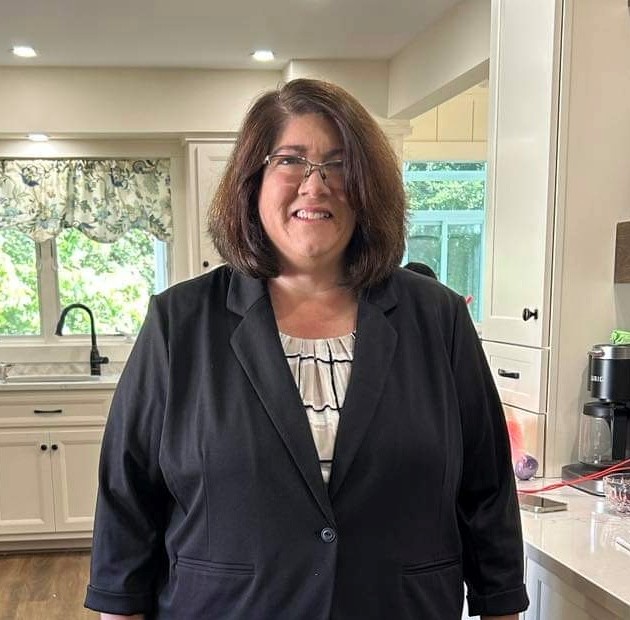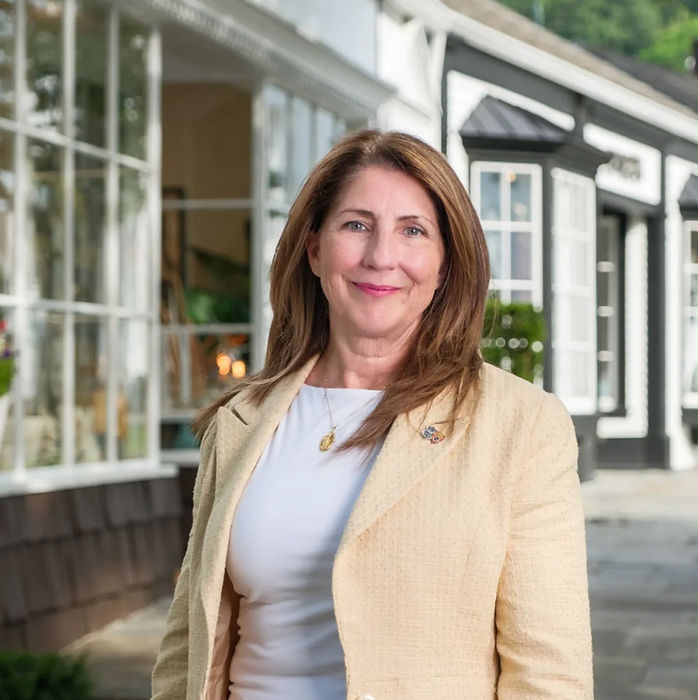



Amitava Das was elected to the Three Village School District Board of Education in May 2025. He’s lived in the district since 2007 and has been an Engineering Leader at Google Cloud since 2018. He also has substantial experience in education, having taught at Stony Brook University for seven years and at Dowling College for 16. Below is the transcript of Kaleidoscope’s interview with Das, edited for length and clarity.
You were elected to the board on your second attempt. Which issues within the district have driven your persistence?
I’m actually not focused on one core issue versus another. That’s not the reason I came onto the board. The board sort of functions as a governing body for the school district, right? So my goal is to be a member who brings my views as a parent, my views as a taxpayer, and my work experience managing financial projects altogether in sort of a governance structure. So the idea is not that there is one particular issue that I wanna chase down, and that it has to be this, right?
Because for most issues I’ve seen in the district, there are enough people usually who might have an opposing view to it. So just because one group wants it doesn’t mean everybody unilaterally wants this. You could think of any issue and you could say purely this is something everybody in the district wants, but somebody always disagrees and there will be people who, for good reasons, may not want it. So the role of the board is to behave as an entity and provide a sense of direction to the administration of the district. I’m happy to be a member of that. I felt like my experience could help that. So that’s sort of why I kept on going.
I’m very passionate about education. It’s something that I strongly believe in. I’ve been involved with it in some form of another even after I got out of school. This was my way to still stay in touch and contribute.
How has your experience teaching at Stony Brook University and Dowling College impacted your philosophy of education and how does that affect your decision making on the board?
There’s a couple of different things. One is that people come with different abilities. People come with different strengths, different weaknesses, different learning styles. Still, you want to achieve the same level of excellence. You don’t want to lower the bar, you actually want to hold everybody to the standard that you want to deliver out of that class. But your way to go around it may have to be modified and be flexible. You adapt to every classroom differently.
I probably taught the same class geospatial analytics four years in a row, and the class was different each and every time, right? I needed to deliver sort of the same standard for every graduating student. But the way I taught that class varied year to year in terms of how I had to engage with the class in order to achieve those same results. That’s partially the fun for me of why I teach, right? When you go into class, you get a new set of students, and you have to adapt. That’s sort of the foundation of working with a new group.
So you’re working with a new group of people and you may have ideas and experiences in corporations. But you have to learn things. You have to learn how education works. You have to learn how this board works. That’s how I work with my peers and administration. That adaptation is, I think, key. At the end of the day, you want to be able to achieve the same high results that’s expected.
More broadly in the school district, you want to be able to take and serve students of different abilities and help each one of them find the absolute excellence that they can achieve individually. There’s a standard you want to maintain. Over and above that, you want to be able to take every student and say, “What can you do? What makes you shine?” And then help them do that.
The teachers, the administration, the people, the staff who are in the school do that on a daily basis, and they do just such an amazing job of that. So this is about making sure, you know, we support them the right way.
Is there a way for the district to foster true intellectual curiosity as opposed to simply pushing students to build resumes and achieve necessary grades?
One of the things that I find very heartening about the district is that they have continued to support not only the arts, the music, the sports and all these extracurricular activities, but there’s a real intentional way about which clubs and co-curricular activities are supported within the district.
I have memories from when I was a child, right? My best learning in physics wasn’t because I was a really good student of physics, but because I saw some kids playing with electronics and I really wanted to be in the class.
I wasn’t even in that class. I wasn’t in a computer science club. But I was able to play with it and it’s because my interest was there. The school could support that I really developed a love for it. Similarly, students here, through these clubs and extracurricular activities, are really given the opportunity to experiment. You’re not required to be in a club, but it’s something that really interests you. And it’s your way of experimenting and maybe relaxing or just finding your edge.
The school can provide a limited amount of structured curriculum through which it teaches things, but what’s really important is having the facilities, the physical plan, and the teachers that are really interested in helping the students realize those dreams. It’s about having that surrounding system that allows the students to say, “You know what? I really want to learn how to play the guitar while I’m skating.” Maybe that’s a thing, right? Those are the kind of things that I think really help, where students learn more about the world.
For example, my son Amartya is in Science Olympiad. And I think he’s obviously learned a lot of science from school, but where he really learns is when he goes and does this, because it’s something he wants to do. He’s not going to pick something up just because I tell him he should go learn about something. So I think these extra activities are the real things that build character, compassion, and the ability to work together with people. They also just drive the finding of answers for yourself.
Districts across the country are figuring out in real time how to tackle the issues raised by cell phones and artificial intelligence. Without proposing any policies, how do you think administrators and educators should approach these technologies?
Obviously, this is an area where there’s a huge amount of development going on. It’s an emerging field for sure. When it first came on, the big challenge was how to detect it. Then the next challenge became, “How do we incorporate it into the curriculum?” The next phase of it is going to be, “Should we?” That’s a philosophical decision. So there’s a good amount of conversations that have yet to happen.
I think the way we are going to be good at this is by learning more about it, and just by keeping up with the field. I don’t think it helps us if we stick our necks into the sand and say it’s not there. I also don’t think it helps us if we turn around and say, “Let’s just use A.I. for everything.”
There’s a lot of foundational knowledge that’s to be gained. But look, there is a lot of impact that A.I. can have on education, good and bad. It can be an excellent peer tutor. Even so, you have to be very worried about safeguards, so I don’t know if I would necessarily recommend it to elementary school students yet.
But you can have an A.I. agent helping you practice things maybe after you understood something in class. It’s a possibility. I don’t know how good the results are yet. I think it’s an evolving space. So I’m not saying that it should be done. I also fear that if we over-rely on it, if we get the answer and don’t wrestle with the problem, somewhere along the way we’re going to lose the ability to think for ourselves. A lot of the learning that happens around the problem is wrestling with it. So I do fear that part of that learning process is going to be lost.
But I don’t have an answer for you in terms of what we should do or shouldn’t do. I think the most we can hope for is that across the entire spectrum, whether it’s administrators, students, teachers, the community, or the board, we all continuously learn about what’s happening right now in the field and what’s emerging. We’re going to have to keep creating and modifying policies as things develop because this is not done yet.
If you go back, I have several examples you could think about. When the calculator came out, a lot of people said, “This is the best thing since sliced bread.” There’s also a lot of people who said, “Hey, if we teach a student to use a calculator, they’re never going to know how to add, subtract, or do any math ever again in their entire life.” Decades later, that’s clearly not true. It’s a powerful tool. But it’s taken a number of years of policy forming and rationalizing its use to get it fully integrated into the curriculum. Computers were the same way.
A.I. is going to be there. It’s here to stay. Figuring out what form it takes and how we use it, that’s going to take time. There’s no doubt about it. We’re going to see adoption of it in different ways at different grades. Some grades might be taught to detect it, some grades might be taught to use it, some grades might be taught how to work with it. So it’s an evolving space for sure.
How should the district be measuring the success of the restructuring? Is it through cost savings, student test scores, or social emotional surveys?
I think it’s a little from a results perspective, right? We are starting the data gathering phase of the restructuring. We did some subjective work in terms of talking to teachers and administrators and students at different buildings just to figure out what’s working, what’s not.
It’s a pretty big change for the district. The overall hope is that it will lead to durable cost savings. It’s the first step in the long chain of things that’s going to lead to durable cost savings. It’s also to give students more choice in terms of classes they can take, help certain accelerations, give people a wider variety of clubs they can participate in. But all of these are the good intentions. If there’s things that are not working, then we’ll learn about them. You can predict a number of things and then after the change occurs, you have to measure.
So we’re in the measurement phase and we’ll continue to measure over a number of years to see how things are working and fix what we can. I’m sure feedback surveys will be part of it. We always encourage parents and community members to come and talk to us about it. They can write to us about it. They can come talk in the board meetings. They’re also encouraged to send feedback up through their teachers and administration. If parents have certain things they want to address, they can do it. I’d encourage students to do that too, you know? Talk to your building staff and teachers and have conversations about it. We would certainly like to know.
You have publicly stated that the secondary school start times were a priority for you and expressed disappointment that the budget constraints prevented a later start. Now that you are on the board, what specific trade-offs would you be willing to make in the budget to finally implement the change if you are still going for this?
This is a perfect example of something that I’ve sort of looked at this issue several different ways. As my son is going through school I realized how important an issue it is. I was deeply disappointed before I was a board member that we didn’t implement this. I still am even as a board member that we haven’t implemented it. But again, the moment you step into this role you start to realize the balancing issues.
In our fixed budget system, there are going to be costs that are going to keep rising. Healthcare is a good example. When that happens, and it certainly hit us last year really badly, what do you do? How do you prioritize? The board made a decision at that time to prioritize student-teacher ratios, and to not have an extremely high number of students per teacher. Even after that, we weren’t able to pay for the added transportation costs.
This is one of those exact cases where I would’ve thought, “Surely everybody in the district would’ve wanted late times. Like who in the district doesn’t?” But there are factors that come in, not even from a budget perspective but from a scheduling perspective and participation in sports and activities. So there are parents in the district that don’t necessarily support a later start time because of how it would impact scheduling of activities after.
There’s the issue of the budget as well, and then you start really getting into what we can give up. I don’t have an answer of an exact thing I would happily trade away. Because for every set of students that it would positively impact, there’s a set of students that are negatively impacted by taking something away.
We’ll have a couple of different options. One is to continue looking for efficiencies within transportation, and the district is doing a really good job at that. They’re continuously looking for ways to save money. They’re continuously looking for ways to optimize things. Then at some point, hopefully the pressures from increasing healthcare costs ease. That’ll leave a little bit of room in the budget to wiggle. Also, because of the change in the employment composition in terms of retirements and things like that, more room may open up in the budgets.
Finally, in the last board meeting, there was some mention made of possibly breaching the tax cap. I don’t know how much of an appetite there is for that, but if there are a whole number of things that the community wants funded in the face of increasing costs, that may be an option. This is not to say I’m in support of any of it or not because, you know, as an individual, my opinion doesn’t matter. The board as a whole makes decisions. But those are the options, right? So in order to achieve anything, either something else has to go or revenues have to increase.
Regarding the debate over armed security guards, you have a background in both business management and education. What specific metrics or red lines are you looking for before you would feel comfortable voting on such a high stakes safety proposal?
This is a highly impassioned topic, and the district is fairly well divided across every spectrum, whether it’s taxpayers, parents, teachers, or administrators. There’s a fair amount of division on this issue. We’ve seen a huge amount of letters and in-person readouts at the board meetings. We’ve surveyed parents, staff, and administration, and the results are pointed in one way or the other, but overwhelmingly so.
There are several different points of view. I’m not going to repeat them at this point. But the biggest we have to think about is the impact on the students, the teaching, and the learning environment.
We can observe what has been done at other schools. I think there’s some learning to be had there, like where they have implemented and what changes it’s made to the teaching and learning environment. I think we can gather some of that.
The next piece of it is going to be the budget. There is going to be a financial impact from this if we implement it. The way we implement it and which of the recommendations we pick up is going to have an impact on how much. So then it goes back to the original story. What are you willing to give up in order to make this happen? I would need to see a lot of that information before I voted one way or another on it.
Student safety is a huge concern. This is where there’s a lot of division, because there’s just as many people who think that having armed guards will increase the safety stance of the school as people who think that it’ll reduce the safety of students. I don’t think there is any conclusive evidence that points one way or the other. But the board and the school district are doing a great job of taking information like this and posting it on the website.
Have your six months on the board changed your expectations for trustees and local governance, and if so, how and why?
One hundred percent. The first of it is, as I said, that nothing is obvious. Nothing is universal. When I was a young man growing up, I had a mentor who had done consulting work for the government, and he told me there are two roles that everybody must work in at some point in their life. You must have worked in a sales job where your income is dependent on making a sale. The other one he said is that you must have worked in government.
This is a good example of it, where you’re looking out for the interests of all and trying to look after the whole community. The board is there to represent the will of the entire community while using its experience and rational thinking. Certainly, within that group there may be people who are perfectly willing to just pay more because education is such a cornerstone of what we need to grow as a society, because education matters and our students doing well and our children doing well matters. There may be other parents in the district who may be having a really hard time, just with the economy the way it is, right? It’s not an equal effect for everybody. For them, every dollar matters, and it’s not as easy for them to say, “Let’s just pay more.” Their children may be in the school district, but even then, for them it may be hard to say that. So nothing is that black and white. Certainly being here has shown me that piece of it.
But you can also have an impact. Things that the board does impact policies. The board’s policy on cell phones, for example, was ahead of its time. Eventually it became a state policy. It’s probably unpopular with a batch of students, but, overall, I think there is a great amount of good that’s coming from it. I was super happy with the way it came through because it gives people rational access when they need it, but you’re not going through a huge implementation cost. So there’s a real impact you can have in the community with the work that’s done both through policy and governance.
As apathy and cynicism rise, community participation and voter turnout continue to decline. How can we reverse this trend, especially amongst young people?
Well, just in the Three Village district itself, if you look at the voter turnouts, they’ve declined over the years. Last year was exceedingly low. Sometimes, it’s because the district is an exceedingly well run district. I’m sure there are things we can fix and can improve. But overall, this is a well-run district from the little I’ve observed so far. So perhaps in the absence of one great unifying bad thing that somebody must go win against, maybe there are a few things that are going fine.
I do wish there was more of a turnout at the elections, but it’s tough. It’s tough for schedules, it’s tough for working individuals. I get it. I do hope that students, as they learn more about the issues and about what’s going on in the community, start to take a real interest, and that they drive that through their family members and themselves when they’re eligible to vote. I think it’s important to stay abreast of the issues. Really stay informed, attend board meetings. It’s amazing that the board meetings are livestreamed. If you miss it, you can go watch it later.
And don’t just listen, but then go participate. Go, come up to a board meeting and speak, write a letter. Make your voices heard. And it doesn’t have to be something that’s just on the board agenda. If there are things that really are important to the community, then people should feel free to write and come tell us about it.
But I don’t think it’s necessarily apathy. I think things are running well for the most part. There are things we’re going to continue to improve and I hope people talk, speak about it, and bring it to our attention. And we can continue to look at things.