

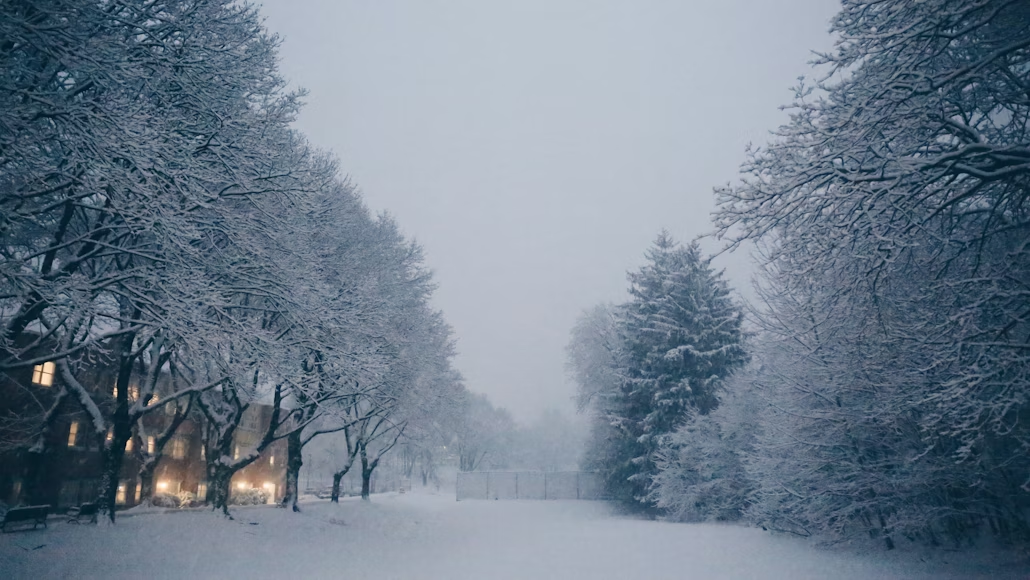
The anticipation of waiting for the phone call from the district, the joy of going sledding when you would normally be in class, the comfort of a home-cooked meal and a cup of hot chocolate instead of eating in the school cafeteria: these are all some of the fondest memories people have of snow days. However, these snow days have historically only occurred once or twice a year. This winter has seen far more snowstorms than usual. As a result, some areas, such as New York City, have turned to virtual “snow days” to ensure that the weather doesn’t jeopardize education. Although snow days may be exciting for students, too many can result in educational setbacks. Therefore, virtual snow days are a beneficial solution to particularly snowy winters such as this one.
Virtual days create a better system than simply sending students to school even when there is inclement weather, as parents don’t have to worry about slippery roads and shoveling snow. With online instruction, students can relax at home without putting additional stress on parents, while still learning the fundamental material of each subject. Instead of students having to travel in potentially dangerous conditions, they can have a safe learning environment from the comfort of their homes.
Just as virtual days are better than ignoring the weather and going to school either way, they are also better than an excessive number of complete snow days, as these disrupt learning. When there are several unplanned days of missed material, classes can lose their momentum, and students might forget what they have learned. Slower, inconsistent learning can result in students being unprepared for end-of-the-year tests like finals and Regents exams.
Additionally, by providing virtual days, the school year would not have to be extended into late June. Making up school days during breaks often disrupts family vacations, summer internships, and jobs. Using remote learning when needed allows students to avoid any unexpected inconveniences with conflicting schedules.
Sam Abramovich, the associate dean of academic affairs in the University of Buffalo’s graduate school of education, told Spectrum News, “When learning gets interrupted for long stretches, the learning outcomes suffer…repeated disruptions, they add up, especially for students who already need a lot of structure.” Being involved in both higher education and schooling for teachers, Abramovich’s argument highlights the importance of consistent education, and thus the importance of virtual learning when snow days become too commonplace.
Although having snow days is fun and exciting for students, virtual days are more beneficial in the long term by ensuring constant learning without inconvenient travel.